Wednesday, September 14, 2011

A Tale of Oma's Determination and Haferflockenkuchen

Today is my Oma's birthday, she is 92 years young! So to honor her, today's post is another story from my fabled trip acompanying Oma across the land of her youth. It is actually the story of my 22nd birthday and how Oma yet again, inspired and influenced the direction of my life.

 So far, we had celebrated Easter with the Pope at the Vatican and spent a week in Oma's birth city, Meran, Südtirol. There, we stayed in a 300 year old house as guests of Father Eugen, the man who replaced Oma's brother, Father Stefan, who had been the presiding priest there for 60 years.
Oma was giving me a short tour of the cavernous 300 year old house where her brother lived for 60 years with his fellow priests. I then went around and tried to pry my way into every room, sure I was going to find and entrance to Narnia!

On a freezing morning of April the 18th, in the tiny Alpine village of Teisten, Südtirol where my Oma grew up, Oma and I set off on a walk to the tiny city of Welsberg, just down the mountain from Teisten. From there, we walked back up a rather steep hill to reach the 17th century castle and 11th century castle ruins on the opposite hill behind Oma's childhood home. I was deeply concerned for Oma as even though she was bundled up in a heavy coat and wrapped in a scarf, her whole face was blue! I chidded myself for bringing and old woman yet again beyond her limits. However, stubborn and determined not to let the hills of her childhood defeat her, she trudged along and climbed that hill up to the castles! In the month that Oma and I spent in Tiesten, we walked everywhere and even spotted an 97 year old, former class mate of Oma's riding her bike up a hill that I had trouble walking! I'm not lying! The fountain of youth must trickle down from the tippy tops of the Alps.

This Oma and said school friend looking at an old class photo circa 1925. I swear on my life, she was riding her bike around town!
When we reached the 17th century castle, still occupied by the relatives of the Duke that employed my great grand father to rebuild the outer castle walls and gave him the opposite hill as payment, we were saddened to find that the draw bridge to the entrance had collapsed that winter from the wieght of the snow, so the castle was not open for visitors. However, Oma was able to share her own stories from the outside of the castle, carrying stones to the building site and picking mushrooms in the woods to feed the family.


It is difficult to see, but that is not a complete bridge.

The easiest part of the wall to see that my great grandfather rebuilt.
From there, there was a trail leading up to the 11th century castle ruins. Oma was a little tired and I encouraged her to sit on a wooden thrown just off the trail. I promised to run up to the ruins, take a few pictures and return shortly, which I did. Oma however, even at the age of 90 was never one to sit around. When I returned to the wooden thrown, I found it empty! Panicked, I called out for her and she responded by yodeling half way up the hill to the ruins, which I had just run down! So I started running back up the hill, which quickly became a walk and found her much farther than I ever thought she could have climbed. She angrily accosted me for leaving her to rot on that chair! A lesson, I quickly learned was that my Oma would rather die in action before she sat idly by, letitng me have an adventure.


The 11th century castle ruins directly opposite Oma's childhood house.


The 17th century castle from the 11th century castle ruins. 
 We returned to our rooms to rest and warm up before my birthday lunch with Oma's only two remaining spinster sisters: Pia and Miranda. Their friends and care takers Frau Anna and Frau Rose were also joining us for dinner. We had a simple platter of Speck, the specialty cured meat from Südtirol garnished with quail's egg and cherry tomato "toadstools." My great aunt Miranda insisted on baking my birthday cake rather than letting Oma buy one at the bakery, she made a Haferflockenkuchen, which means "oatmeal cake." It is a dense butter cake with oats and topped with powdered sugar and more rolled oats. Oma, who usually makes her very special multi layered Rum cake for our birthdays, brought 22 candles because she was not sure that the Europeans would have them. They did, but Oma was prepared anyway. So, Oma and Miranda set my Haferflockenkuchen, ablaze with 22 lit candles in front of me to blow out. I drew a great big breath to blow out all of the candles, which I did, successfully; however, I also blew all of the powdered sugar and rolled oats off the top of the cake all over the table! Frau Anna laughed hysterically. Somehow, someone should have seen that coming....

Haferflockenkuchen

Frau Anna, Oma, and Frau Rose crossing the street.

Oma's last surviving siblings, Miranda, Oma, and Pia.
So my 22nd birthday was low key. I spent it with Oma, roaming the hills of her youth and eating at the table where she ate many meals growing up. Oma proved that day and all throughout the trip that age is just a number. May we all be so blessed as to be capable of half of Oma's accomplishments at half her age! As for inspiring the direction of my life, my birthday just happened to occur during that trip, however, every year since then, I have been blessed with the opportunity to travel abroad during my birthday. I hope to continue that trend for as long as is reasonably possible.

Tuesday, September 6, 2011

A Breakfast to Keep Me Warm

As I have expressed before, I absolutley love and thrive in hot weather. This summer was no exception, and as always, it has come and gone too soon. Many of my summer activities were worthy of a blog post and occasionally I even considered writing, but the long, sunny days and warm, fire fly filled nights always kept me away from my computer.
While I was off-line, the blog stayed afloat without me, recieving 1-6 pageviews a day from readers all over the world; there have been three pageviews from Algeria this week alone. Most of them were looking for wedding cakes. The post about the royal wedding cake and traditional wedding cakes from all over the world is by far the most popular post with over 400 total pageviews and coming in [a close] second with 49 total pageviews is the Cinco de Mayo post.

 Last week I sensed a chill in the air and secretly pined for all things autumn. The summer heat, which I enjoy so much must have caught my betrayal, because its gone. It left town overnight, litteraly. I am left wrapped in jackets and sweaters; the old adage "be careful what you wish for" comes to mind. Luckily, the weather in Kansas City is famously fickle. It can be 70 degrees one day and 90 and humid the next. The forecast for the entire week is for mid 70's so I am going to indulge my autumn fantasies and hope we have a few more 90 degree days ahead.
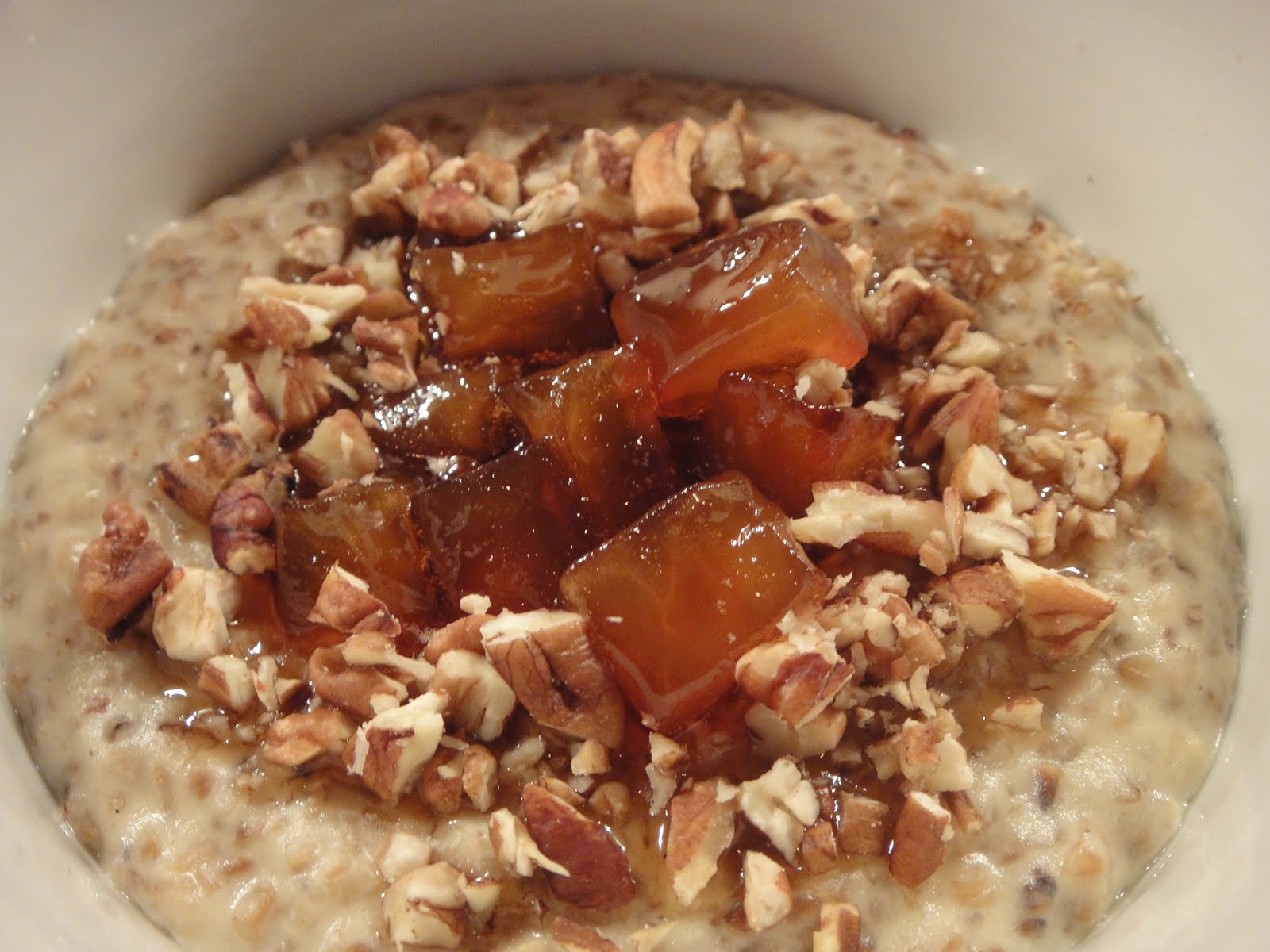
Chief among my cool weather yearnings was a bowl of oatmeal, specifically, the wonderful chewy, vanilla laden steel cut oatmeal at the Apple Pie Bakery Cafe at the Culinary Institute of America where I spent every morning as either a server or breakfaster.
So that is how I began my week of cool weather indulgences: with a hot bowl of steel cut oatmeal.. MMMMM my insides are still warm just thinking about it!

On the right, is a pile of steel cut oats as you buy them in the store. On the left, are the oats for my breakfast which I have toasted; it gives an extra nuttiness to the oatmeal.

Toasted Steel Cut Oatmel with Vanilla Maple Caramelized Apple Cubes and Pecans

While the oatmeal was cooking, I also decided to fry some bacon, potatoes and an egg. A complete breakfast.

Tuesday, May 31, 2011

A Proper Kansas Education


My second grade year book photo.

The class photo: I'm the second from the right in the front row.
My second grade teacher, Mrs. Young who was undoubtedly the best elementary school teacher ever, put a sweet spin on the curriculum. She taught us fractions using recipes for hard candies and then made them in class. She brought an entire Thanksgiving meal to school so that our class could use the Thanksgiving poetry place mats we made. At Christmas, she baked and assembled a gingerbread house for each student to decorate. (She didn't believe in mini milk cartons smeared with frosting and covered with graham crackers.)

Our Kansas Day celebration was no less sweet. You see, an elementary education in Kansas, at least when I was there, includes a celebration every January 29th of Kansas Day, the day that Kansas became a state of the union. It usually involved decorating a manila tab folder with the top right corner cut off in a way to look like the state of Kansas. Inside the folder, were worksheets filled with fun facts about Kansas: the state bird: western meadow lark, the state insect: the honeybee, the state tree: cottonwood, the state flower: sunflower, and the state reptile: the ornate box turtle. (obviously, the indoctrination worked, because I just spit all those facts out from memory) However, Mrs. Young had the most unique celebration of all five Kansas Days I ever celebrated.

Before I tell you about Mrs. Young's celebration, I should explain some pioneer history for all you non Kansans. Kansas is one of the "Great Plains" states, it is large and flat and at the time covered wagons rolled through, there was only grass as far as the eye could see: no trees. This provided a problem for the people trying to cross the state and especially for the people who settled there. How can you build a fire to cook if there is no wood and how are you going to build a house? The answer to both was right on the ground: houses were built by packing sod around shallow pits in the ground making the houses half under ground; (and you thought green roofs were a modern idea!) fires were fueled with what the french called "buffalo wood" and the English called "buffalo chips." What ever you called it, it was a buffalo turd that had dried out in the sun for a few weeks and it was the children's job to collect enough to keep the fire lit. It might sound gross, but "buffalo chips" burned more efficiently than grass, which produced mostly smoke, and were an abundant fuel source, until they almost killed off all of the bison.

Getting back to Mrs. Young's Kansas Day celebration: she read a great story about Pioneers and then she split the class into groups and sent us all on a Kansas themed scavenger hunt to find... buffalo chips!(no-bake cookies piled on a plate)

Believe it or not, I still enjoy no bake cookies. You might think I was traumatized by having a cookie compared to a dried buffalo turd, but you would be forgetting how awesome it is to an eight year old to joke about eating poop. My unique history with these cookies endeared them to me; I have a private chuckle every time I eat one.

Friday, May 27, 2011

Do Your "Mise en Place" and Travel

To complete any task, it is much easier to have all of the necessary equipment and materials ready and waiting to be used. Chefs call this "mise en place," a French term that literally means "put in place." This step is crucial in the kitchen where the next move is always only seconds away. If chefs fail to plan for the next step, their movements are disjointed and inefficient, delaying your meal.
Like many chefs, I apply "mise en place" to everything I do, including and especially traveling. Where unlike in a kitchen, when prep time ends and service begins, it is possible, however rushed, frantic and frustrated it makes the entire kitchen, to make more prep; however, once you have left home, anything you forgot is unavailable until you return.
Arriving at the airport and realizing you forgot your passport or getting sick on vacation and not having your own medicine waiting in your bag will definitely spoil the trip. Because depending on where you are traveling, the cultural views of medicine could be very different from your own and you don't want to be relying on suspect remedies. Once, I got sun poising in Mexico and could not find a soothing sun lotion or even aloe lotion to save my life. The pharmacist gave me a lotion that burned and only made my symptoms feel worse. I had to butcher a neighbor's aloe plant (which puzzled my Mexican friends because they don't seem to use aloe for burns) and sleep with bags of frozen vegetables to find any relief.

I consider myself an experienced traveler and these "mise en place" practices have never failed to make a successful trip:
A Baggage Scale


This was a birthday gift from my mom last year, and a great gift at that! You simply clip the strap around the handle of your bag and pick up the bag by holding the scale. This scale is digital and reads in pounds and kilos and is also compact so that I can bring it with me to weigh my bags on the trip home. It has become an invaluable tool that takes all of the guess work out of packing checked bags and allows me to pack to the exact weight limit; it has never been wrong. I'm not sure what it costs, but it must pay for itself by avoiding any weight overage charges.
Proper Shoes

It is not uncommon to walk everywhere while traveling and good shoes are critical. This might seem obvious, however, the obvious details are the ones most often overlooked. Sore, or blistered feet will not be overlooked, they will remind you with each step that you forgot to do your "mise en place." My shoes have been up and down Manhattan New York, from Rome to Munich, across China and all over Mexico. They have become tattered and dirty and the souls are separating, but they are great shoes! After I replaced the lining with Dr. Scholls inserts they were like new again. I love these shoes, but I fear they may have seen their last trip. 
Passport with my Toiletries

It might seem odd, but  my passport is always in my toiletries bag. I joke that in case I ever need to escape the country, I can make a quick get away. However, the real reason is practical and speaks to my itinerant nature. I move so often, that my belongings rarely stay in the same place long and become misplaced in new locations. My toiletries are among the few things that I ALWAYS have with me. It is convenient because whenever I travel I need my toothbrush, toothpaste, deodorant... and my passport.
Carry Ons

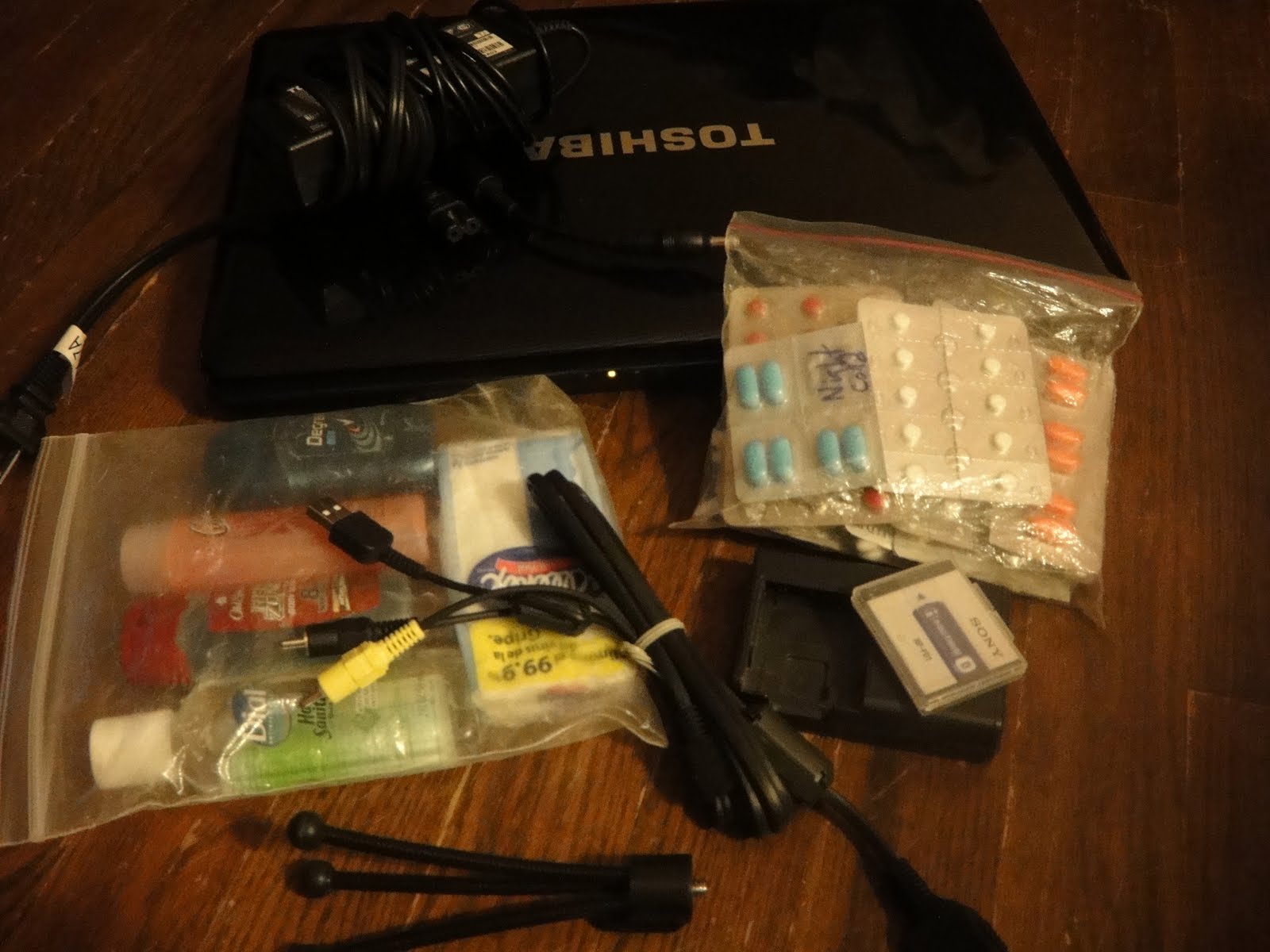
For better or worse, the regulations regarding carry on baggage seem like they are always changing. However, my carry on items remain the same: I bring a back-pack that I have had for many years and a small blue duffel bag that I have had for even longer. The back-pack contains my camera and accessories, my laptop, a folder containing all of my travel information and anything small, fragile or valuable. The duffel bag contains my laptop's power cord(because it is too bulky to go in the back pack), a sandwich baggie of travel size toiletries, a variety of pills for a variety of symptoms, a change of clothes (every time I do not follow this rule, I get stranded somewhere or my baggage gets temporarily lost and I actually need a change of clothes), and coming home it is full of heavy souvenirs.
Packing Patterns
Like any experienced line cook, who can look at their station and see what is out of place or missing, I travel so often that I have developed packing patterns. These patterns come from using the same luggage on every trip and they help me notice missing or out of place items.
Whether you are making a meal or packing for vacation, remember to do your "mise en place!"

Tuesday, May 24, 2011

Top 10 Reasons to Miss Mexico, #5- #1

#5: Markets
How do you buy your meat? Do you watch your butcher cut into whole sides of freshly butchered animals for the cut of meat you want?
Fruits and vegetables are stacked into impossibly high walls at every stall.
Forgive me for being repetitive, I know I have expressed my love for markets many times here. I absolutely love the freedom they give shoppers who are free to comparison shop for the best quality, best prices and even find unique products like all double yolk eggs. Markets exist in the U.S., but they are the alternative means of shopping and heavily regulated, which is done in the name of public safety and sanitation. Malarkey!

#4: Sapote Fruits
Mamey Sapote: I think it has the sweet flavor of squash in a fruit with the texture of avocado.
Chico Sapote/ Sapodilla: a new favorite, it looks like an old potato from the outside, but inside, it has soft, mushy flesh that breaks into segments. The texture of the fruit is slightly gritty like extremely over ripe pears. The Flavor is intense molasses. Juice just pours out of this fruit as soon as you pull it apart. It was too sweet to eat more than one segment at a time.
Sapote Negro: sometimes called the chocolate pudding fruit because it has the same color and texture. Personally, I didn't think it tasted like chocolate. Sapote Negro is actually a relative of the persimmon.

There are a multitude of distantly related and unrelated fruits that carry the name "sapote." Here in meat and potato country we have a saying: "I've never met a potato I didn't like;" I can now confidently apply the phrase to sapote fruits as well.
Sapote fruits, related to the plant family sapotaceae or not, do seem to have a few key similar characteristics:
All fruits grow on large trees throughout the world's tropics, all sapote fruits are desserts in themselves, no sugar added, all sapotes become nearly mush when they are ready to eat (which would be why they're not available in your super market), and all sapotes have large seeds which are toxic if ingested.
#3: Tacos

I regret, of the thousands of tacos I have eaten in Mexico, this is the only picture of them. In the summer of 2008 I ate my first Mexican taco from Chana, a celebrity in Acapulco for selling tacos on the street.
This should be self explanatory and it might have to be, because I don't know where to start! The topic of Mexican tacos is so vast, it deserves its own blog, let alone its own blog post.
I will start by making clear that ground beef tacos, seasoned with a packet from the grocery store piled with yellow cheese, lettuce, tomatoes, and chunky salsa is not Mexican.
So what are real Mexican tacos? well, they're kind of like classical French sauces, they're all made from the same components, but there are a lot of regional differences and if you change one ingredient, it gets a new name.
Also, depending on the type of taco you order and where you are ordering them, you may order a certain number of tacos or you may order the taco meat by weight and then you get all the fixin's. The fixin's will vary, but you will always squeeze lime juice over it and add either red or green salsa. Then tear the tortilla in half or quarters and pinch a bit of meat between the tortilla with your hands and there you have your taco.
#2: People Selling Goods on the Street
I never fail to be amazed by the amount of food that is able to be stored, cooked and served on a card table and portable flat top grill on a sidewalk.

For all the problems Mexico has, in a few ways, Mexicans are more free than Americans. (don't tell Jonathan I said that, this topic caused many debates) They truly have a free market capitalist economy. People are free to sell, pander goods, and perform their talents for money as they see fit.
Enterprising Mexicans are free to set up a grill and sell food on the sidewalk, or walk around with a basket of goodies. They can also stand on the street and act as parking attendants, directing you to a good spot, and for a few pesos they will wash your car while you're away. At stop lights, jugglers, fire breathers, slit walkers and clowns entertain while others pander candy and flowers. Several times, I saw an individual with a bucket of paint, painting yellow stripes on speed bumps collecting change as people passed, of course they use water based paint so that they can come back in a few weeks and paint the stripes again. These were just ordinary citizens trying to earn money.
There are also plenty of people who sell real, tangible goods by walking them around the street or driving around with speakers on top of their car announcing what they are selling. Need a queen size bed frame? or dinning room table set? There are men who walk the streets pushing a cart carrying them, I swear! Music is a great attention getter. Once I saw two men pushing a very large xylophone for sale down the street and playing it the whole way. Then there was always the gas truck:

I'm not saying that these are jobs Americans should aspire to, or that drug cartels aren't giving poor people a shake down for money earned. Maybe the government is simply too busy to worry about how its citizens make and honest living, but can you imagine trying to do any of those things in the U.S.? Someone would call the cops! Then you'd be shut down and saddled with a fine for not having a permit or you could be arrested, or worse, sued! Is that freedom America? Nobody forces you to eat street food, if you think it's unsanitary, then don't eat there, but government should not impede anyone from starting an honest business with rules and regulations.

#1: New Expiriences

I looked too gringo eating with a fork and knife, so I switched to eating my traditional Mole with a tortilla, the Mexican utensil.
The thing I will miss most about Mexico is the fact everyday I saw or learned something that I had no idea existed. I miss the adventure involved in everyday tasks. The truth is that Mexicans and the whole world do not live the same lifestyle we do. I like some of their customs better, and I like some American customs better, but what I like most of all is learning about all of the customs and ways of life.

Monday, May 23, 2011

Top 10 Reasons to Miss Mexico, #10- #6

I have been home, in the United Sates for a week now, actively looking for a job as well as cleaning out my bedroom of things from high school and college. I am already pretty settled into my new routine at my mother's house. However, there has been one thing nagging in the back of my mind: the draft box in my blogger account. It is full of fragmented posts about Mexico that I couldn't seem to type more than a few sentences about. So, in my determination to put everything from the past, including Mexico, behind me, I am mashing them all together into a "top 10 things I miss about Mexico" list.

#10: Cheap Beer

Mexico is not the beer guzzling nation that the United States is, it has five or six national brands of beer and it's all light and easy to drink. However, what Mexican beer lacks in flavor and body, it makes up with unique preparations and cost. By "unique preparations," I mean that you can enjoy your beer with lime, chile and/or a salted rim.(refer to #6) The cost is cheap, cheap, cheap. I once went out with 30 something Pesos in my pocket (a little over $2 U.S.) and bought 1.5 liters of beer for me and two wine coolers for Jonathan and had change when I got home.

#9: the Sun and Heat

It can be difficult to find shelter from the searing sun, especially on the beach.
Back in February, when I was packing, and it was negative something outside, I could not imagine that it wasn't still just a little bit cold in Mexico. With that logic, I packed a jacket and a few sweaters. I wore the thinnest sweater a few times after the sun went down, but the rest remained untouched from the time I unpacked them to the time I repacked them. Many times it was too hot for clothes, let alone a sweater!
Full of  hope and assumption that summer was in full swing, I returned home ready to finally put the sweaters away for the rest of the year.
 Nope. The high in Kansas City the day I returned was 69, near freezing temperatures by my count. Instead of putting sweaters away, I was pulling more out. I could not keep warm enough.
Now, I yearn for those consistent, high 80 degree, sweaty days. When will they come to Kansas City?

#8: Vibrant House Colors

Here, in the mid-west, whole neighborhoods are built where every fifth house has the same design and they are all a shade of white or beige. But color is everywhere in Mexico. Houses, buildings, and interior wall colors are bright, varied and as different from one another as apples and oranges. It is not uncommon to see a row of buildings painted blue, then red, then yellow, then green, making a rainbow of buildings.

#7: Uncontrolled Traffic

Of all the buses to ride in Mexico, the party buses in Acapulco provide the most interesting ride.
Of all the places I have been, the United States has the most regulated traffic. In my home town, in Missouri, drivers could be accused of meandering, slowing down to smell flowers on the side of the road and waving to neighbors and passers by. Even the aggressive, speed demon drivers in New York seem tame compared to the some of the shenanigans I've seen around around the world.
In Mexico there is a certain uncontrolled, free flowing rhythm to traffic: pedestrians cross the streets as they please, drivers whizz through lanes and create new ones. Buses are as ubiquitous as taxis and even though there are a few designated bus stops, you can flag one down and hop on anywhere and then be let off anytime you please, including on the high way. There are traffic laws, but they seem to go ignored as life carries on.

#6: Everything is seasoned with Chile and Limon
A whole isle in the Supermarket for dried chiles.
Anywhere limon could be added, it has been.

In most Western cuisine, seasoning is limited to salt and black pepper. They are part of a proper table setting as much as plates and flatware. Without them, a table feels incomplete and many Americans could not enjoy a meal without these crucial seasonings.
For a long time, I could not understand why my Mexican room mates HAD to have cream(similar to, but totally different from our sour cream), "limon" (Mexican, or Key lime)wedges (Our yellow lemons are rare and unheard of to most Mexicans.), and a salsa on the table during a meal. Even if I had already seasoned the food with these flavors they would go get it and put more on their plate. Jonathan said the food just felt plain without being able to add his own seasoning. That is the beauty of Mexican food: everyone can personalize their food.
But these seasonings aren't just at the dinner table, they flavor everything from candy to beer. While American children dip candy sticks and suckers into flavored powders ranging from pure sugar to mind blowing sour, Mexican children dip their candy into chile powder with lime flavor.

Michelada is my newest Mexican obsession; it is a beer that has been poured into a glass rimmed with salt and chile powder, combined with lime juice and dusted with small chile flakes.

Saturday, May 14, 2011

I Gorged on Mole, Cuitlacoche, and Dulces Tipicos

Sadly, I just returned from my last trip to the city center/ Zocalo, weekend Market, and Puebla's famous candy street. I'm returning to the United States tomorrow.

Jonathan and I started out the day by having a huge lunch at la Fonda de Santa Clara, a very old, traditional Mexican restaurant that panders to tourists. It is not hoaky or cheesy, like most Mexican restaurants in the United States, it is simply all things traditionally Pueblan.
The menu contains everything necessary to taste while in Puebla, like a one stop "eat your way through Puebla" deal. There is also a list of seasonal specialties, this month's specialty is an Aztec dish of century worms (that's how it was translated into English) cooked in a chile sauce served with beans and guacamole. Jonathan said it was a delicacy so I was very excited to order it. Unfortunalty, they didn't have it. (How do you not have the monthly special?!?) So I settled for Puebla's most famous dish: Mole. Half way trough my plate, I swapped with Jonathan for his adobo pork and cuitlacoche.


Mole: Chicken smothered in a complex sauce containing chocolate and nearly 100 other ingredients, sprinkled with sesame seeds and a side of rice.


It was difficult to see, but there was chicken under that sauce.

Adobo pork with Cuitlacoche and a side of guacamole. 

Close up of Cuitlacoche: a special type of mold that infects corn as it grows. Mexicans love it, they grow certain types that are particularly prone to molding. I was very excited to eat it and it had a sweet/ bitter taste that reminded me of bitter greens. The strip of white is cheese.


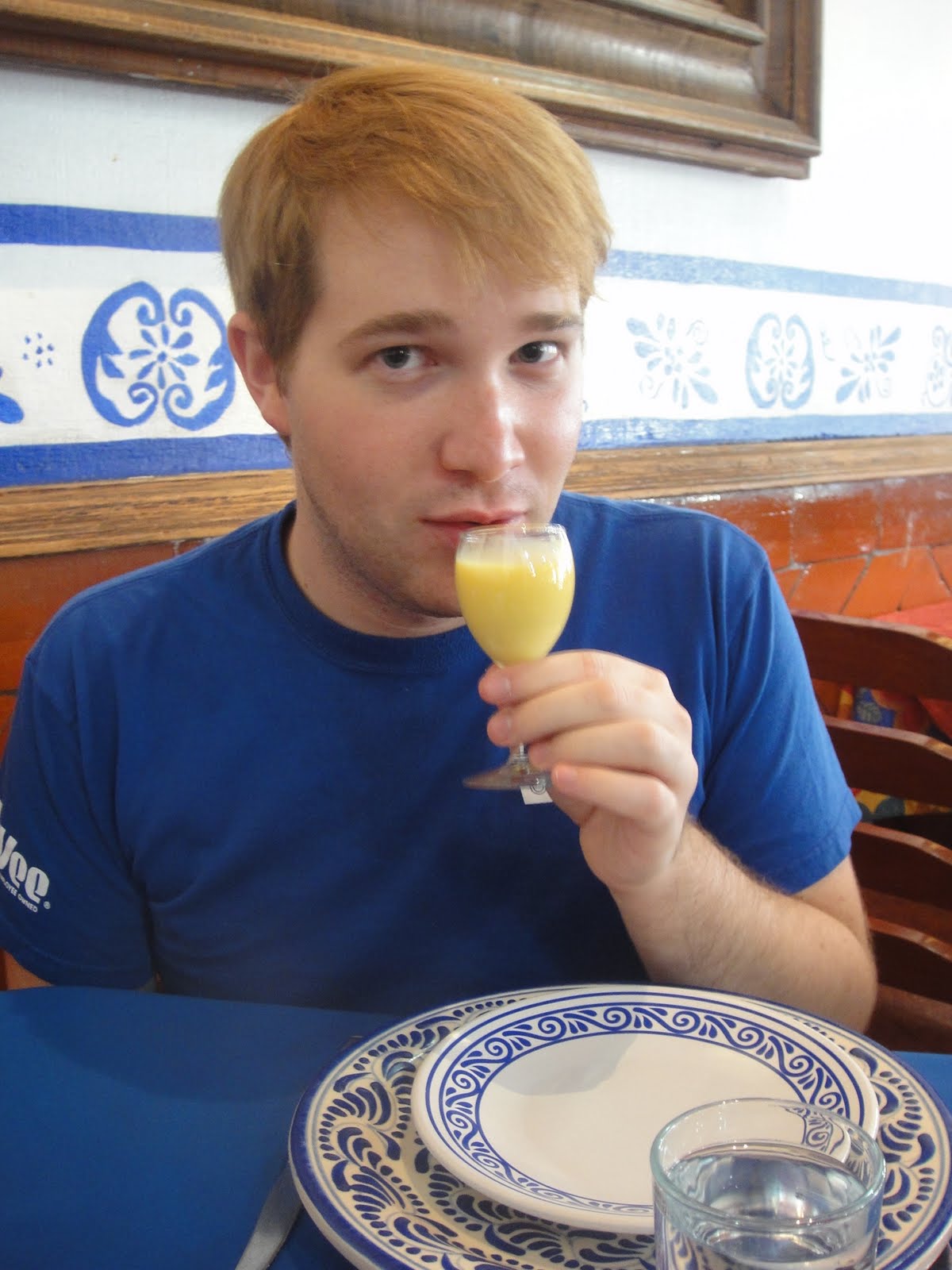
  I also had Rompope, a thick egg drink laced with alcohol: egg nog. It was egg nog without the nutmeg. It is sipped as a cordial all year long.


 I also ordered something that ended in "atole," which is usually a drink made with water and corn and then flavored with other ingredients. This one had squash blossom and chile. I was very interested to see and taste this atole, however it came in a soup bowl with half an ear of white corn. It was good, but not exactly the thurst quencher I thought it was.

 After Jonathan and I both sat back and sighed at the same time, I knew our traditional Pueblan meal was over.

We walked a few blocks to candy street for dessert. Candy street, or 6 Oriente, it's city street name, is lined with candy shops. Signs for dulces tipicos redunantly hang over each shop. Some of them were started by nuns over a hundred years ago. Many of the candies were also created by the nuns in Puebla.

Standing in the middle of Candy Street.

This woman was delivering marzipan roosters to one of the shops. Brightly colored marzipan animals are a common confection all over Mexico, but in Puebla, I only saw roosters.

Aside from the cartoonish aspects, they look like a group of real chickens looking every which way, don't they?

They were so adorable! I had to have one... or three...

Tortitas de Santa Clara: my favorite treat.

stacks of cookies and confections inside a shop


Sugar skulls! These are usually only seen around Day of the Dead in November, but I'm glad this shop sells them out of season.


These are little "cakes" of compressed, finely ground peanut. They look solid, but once you bite into them, they dissentigrate. Maybe that is part of the fun; they are really good though.

These are brightly colored wafer cookies. They also come shaped and decorated to look like all the popular cartoon characters.
My Sweet Mexico has recipes for many, almost all of these confections. On the advice of Chef and author of the book, Fany Gerson, I stopped at a tiny bar I had walked by many times on my trips to the weekend markets: La Pasita. There, they serve a drink by the same name that is thier specialty. It is a raisin liquer served in a shot glass with a cube of salty cheese and a raisin on a tooth pick.


First, you bite the cheese and drink the sweet liquer.

Today was as good an ending to my stay in Puebla as I could have wished for. I lunched on traditonal cusine and gorged myself on sugar candies until my teeth hurt.